

Look at Your Vulva. No, Really. Look
The research on this is pretty clear: cis women who have a positive relationship with their genitals report higher self-esteem, better sexual wellbeing, and greater body image satisfaction. Women with poor vulva self-image experience more sexual distress, lower desire and arousal, and more pain during sex. How you speak about and feel about your body, even down to a specific body part, has real, measurable effects on your pleasure and your health.

Why I Tell Couples to Stop Scheduling Sex … And What to Do Instead!
What some couples find is that they start to look forward to it. Having a date in the calendar, or on the fridge, can create a sense of anticipation not unlike the early days of dating. You begin to look forward to that dedicated time together, and that anticipation itself can spark arousal.
However, getting caught up in the pressure of the marked calendar and putting pressure on someone who is not in the mood is going to do much more harm than good…
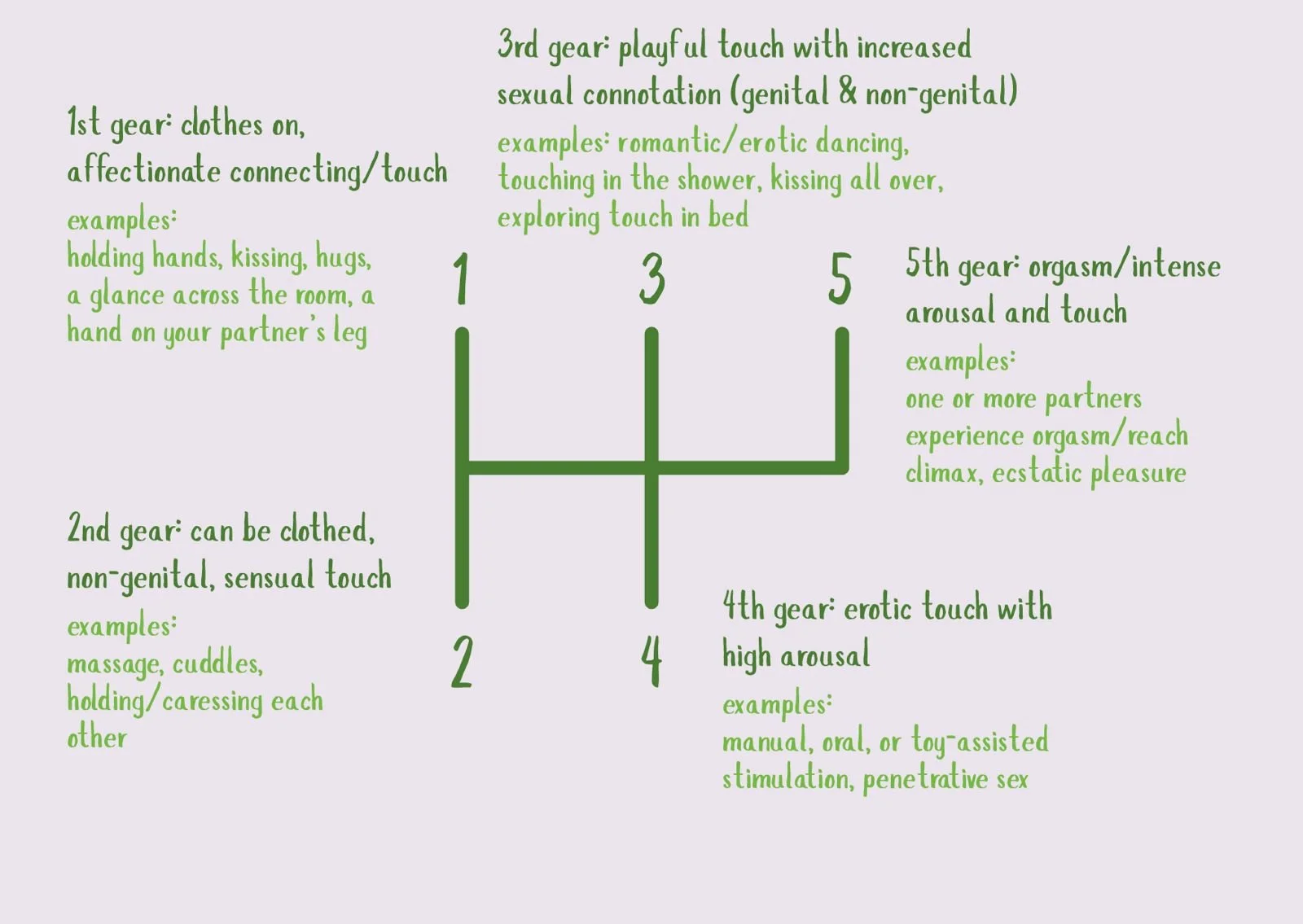
The 5 Gear Theory
The 5 Gear Theory is a model to help people understand each other’s arousal and preferences throughout sex. It was originally developed by Brian and Emily McCarthy in 2003 as a structured script to give couples a shared language of arousal and intimacy. As sexologists, we use a varied version of the metaphor to help clients understand how sex is not only affection and penetration, but a movement up and down throughout various activities and phases that all bring pleasure.
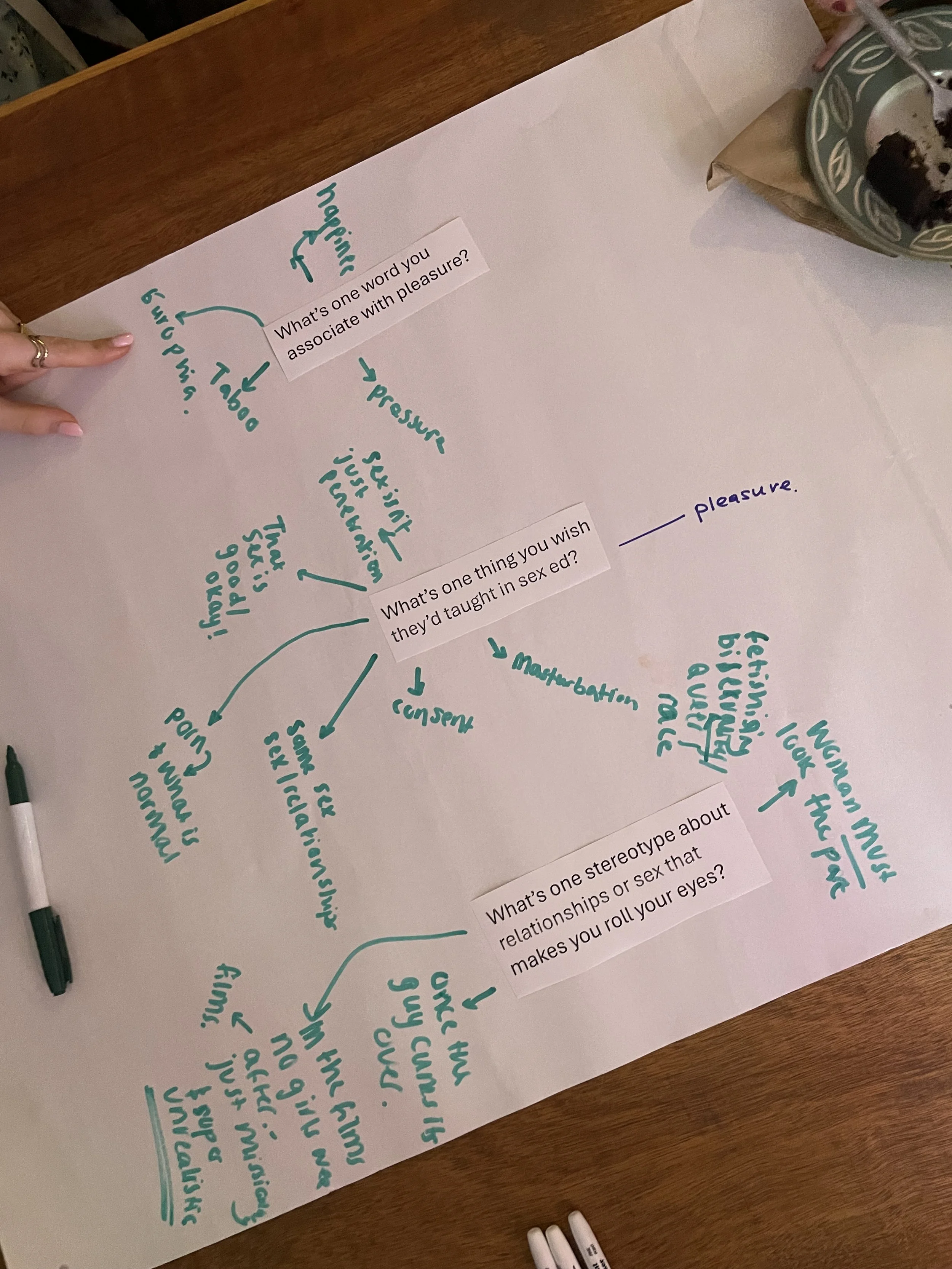
Renaming Sex: A Sex Therapist's No. 1 Tip for More Satisfying Sex
Western culture has handed us an incredibly limited script for what sex is supposed to look like. Shaped by patriarchal norms, the dominant narrative is centred on the penis. This is both socially harmful and biologically inaccurate. Research consistently shows that the majority of women who experience orgasm do so through external clitoral stimulation, not internal penetration. If we define sex as the pursuit of pleasure, then building everything around internal stimulation alone ignores what actually works for most vulva-owners.

Modernizing Sensate Focus: My Trauma-Informed Twist As An Inclusive Sex Therapist
Sensate focus: the bread and butter of sex therapy. In the 1960s, Masters and Johnson developed what became the go-to treatment for couples struggling with desire, arousal, and intimacy - and the outcomes are genuinely good. But it was built on heterosexual relationships and assumes we're all working towards the same kind of sex. As an inclusive, trauma-informed sex therapist, I use sensate focus regularly - but with my own steps, my own ground rules, and a few twists along the way. Here's my version.

Aftercare: Why a Cuddle After Sex is More Important Than You Think
Imagine this: You’ve just had sex. It was ok. Not bad, but you’ve had better. The to-do lists are starting to stream back into your head. You’re thinking about having to shower, or strip the bed, or whether this was really a good use of your time. And then your partner hops right out of bed and disappears to the bathroom. Suddenly, it’s go time. Intimacy is over and real life begins.
This does not make you want to have sex again.
Studies show that ‘average’ sex is rated as better if we spend time cuddling afterwards. Its also the moments our bodies are primed for emotional connection. But most of us are rolling over and reaching for our phones, getting in the shower, or just falling asleep. So what are we missing out on, and how do we change it?

Play and Pleasure in Psychosexual Therapy
Sex is often perceived as a high-pressure activity. Many people feel weighed down by expectations of “performing well,” which can create anxiety and even take away from intimacy. When therapy enters the picture the seriousness can intensify. With homework, readings, and weekly check-ins, sex may begin to feel more like schoolwork than a source of connection and joy.
This is where Play comes in…

Pleasure After Parenthood: Reclaiming Intimacy in a Changing Body and Life
Becoming a parent can profoundly change the way we experience our bodies, our relationships, and our sense of pleasure. Maybe sex has started to feel different (or disappeared entirely), maybe you feel touched out, or maybe you miss feeling connected in the way you used to.
If that sounds familiar, you're not alone. And more importantly: you're not broken.
Think of this as a gentle guide back to your pleasure, on your terms.

A Common Tale: Understanding Responsive Desire
Have you ever found yourself thinking, “Wow, that was great—why don’t I do that more often?” after sex… only to roll your eyes at the idea the next time it crosses your mind?
If so, you’re not alone.
In this blog post, I explore what is meant by the term ‘responsive desire’ and how we can use this to improve our sexual wellbeing.